
The Titanium Tightrope: Navigating Aerospace’s Critical Metal Crisis
If you’ve been following our work at Lightning Machines, you know we’re obsessed with the nuts and bolts of how critical metals make it from the ground into the high-tech machinery that powers our world. Today, we’re looking at a metal that is as indispensable as it is problematic: titanium.
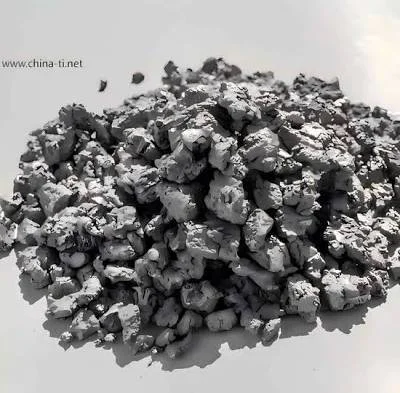
Fragmented titanium ‘sponge’, raw metal before processing into superalloy.
For decades, titanium has been the "miracle material" of the aerospace industry. It’s light, as strong as steel, and shrugs off corrosion. But as we sit here in late 2022, the "miracle" is starting to look more like a massive supply chain headache. The geopolitical tremors of the last six months following Russia’s invasion of Ukraine have exposed a vulnerability that many in the industry knew was there but hoped they’d never have to face head-on.
The Elephant in the Room: VSMPO-AVISMA
To understand the current risk, you have to look at Russia. Specifically, you have to look at a company called VSMPO-AVISMA. Based in the Urals, they are the world’s largest vertically integrated producer of titanium. Before the invasion of Ukraine in February, they weren't just a supplier; they were the supplier.
Boeing was sourcing about one-third of its titanium from them, while Airbus was even more dependent, getting nearly 60% of its supply from the Russian giant [3]. When the tanks rolled across the border, the aerospace world held its breath. While many Russian commodities were slapped with immediate sanctions, titanium has remained conspicuously exempt in both the US and the EU. This is largely because the EU blocked specific sanctions on the company in July 2022, fearing that Russia would retaliate by cutting off the supply entirely [5].
A Tale of Two Strategies
We’ve seen two very different reactions to this risk over the last few months.
Boeing made the bold move in March 2022 to suspend all titanium purchases from Russia [2]. They could afford to do this because they had been aggressively stockpiling for several years and had more robust domestic supply options in the US.
Airbus, on the other hand, is in a tighter spot. While they’ve also been looking for "alternative sources," they continue to buy from VSMPO-AVISMA as of this month. They argue that a sudden cut-off would ground European aerospace manufacturing before the rest of the world could scale up to meet the demand. It’s a high-stakes game of chicken with global geopolitics [3].
The Hidden Bottleneck: Processing vs. Mining
Here is the bit that often gets missed: the risk isn't about finding the raw ore. Titanium is actually quite abundant in the earth's crust. The "pinch point" is the processing—turning that ore into "titanium sponge" and then into aerospace-grade alloys.
As noted by the USGS Mineral Commodity Summaries (January 2022), the global industry was already tight before the conflict, with sponge production concentrated in just a few countries: China, Japan, Russia, Kazakhstan, Saudi Arabia, and Ukraine [4]. While China produces more than half of the world's titanium sponge, much of their output is not yet certified for the incredibly strict standards of Western commercial aerospace. That leaves Japan as the only other major player capable of filling the gap left by Russia. Japanese producers are scaling up, but you can’t build a high-spec titanium forge overnight.
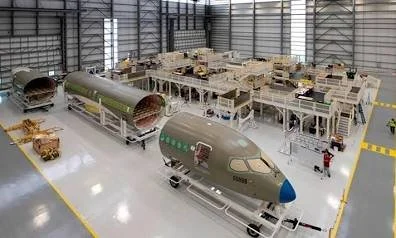
Aircraft Assembly credit: Airbus
Where Does This Leave the Industry?
As of September 2022, we are seeing the following risks play out in real-time:
Lead Time Blowouts: For certain titanium parts, lead times have already jumped significantly as manufacturers scramble for non-Russian material [2].
The Ukraine Factor: Ukraine itself is a significant producer of titanium minerals and sponge. However, the conflict has severely disrupted their ability to export, with major facilities sitting near or within active combat zones [1].
Resource Dependency: A June 2022 briefing by the European Commission highlighted that the EU is nearly 100% reliant on imports for aerospace-grade titanium, making the region uniquely vulnerable to geopolitical blackmail [1].
The Lightning Perspective
At Lightning Machines, we believe the solution isn't just finding "new Russias" to buy from. It’s about technical sovereignty. We need to invest in domestic processing and, crucially, in better recycling technologies. Currently, a huge amount of titanium "scrap" from the machining process is downgraded into the steel industry rather than being cycled back into aerospace-grade material.
The current crisis is a wake-up call. We can no longer treat critical metals as simple commodities that will always be there when we click "order." They are strategic assets, and it’s time our supply chains reflected that.
References: